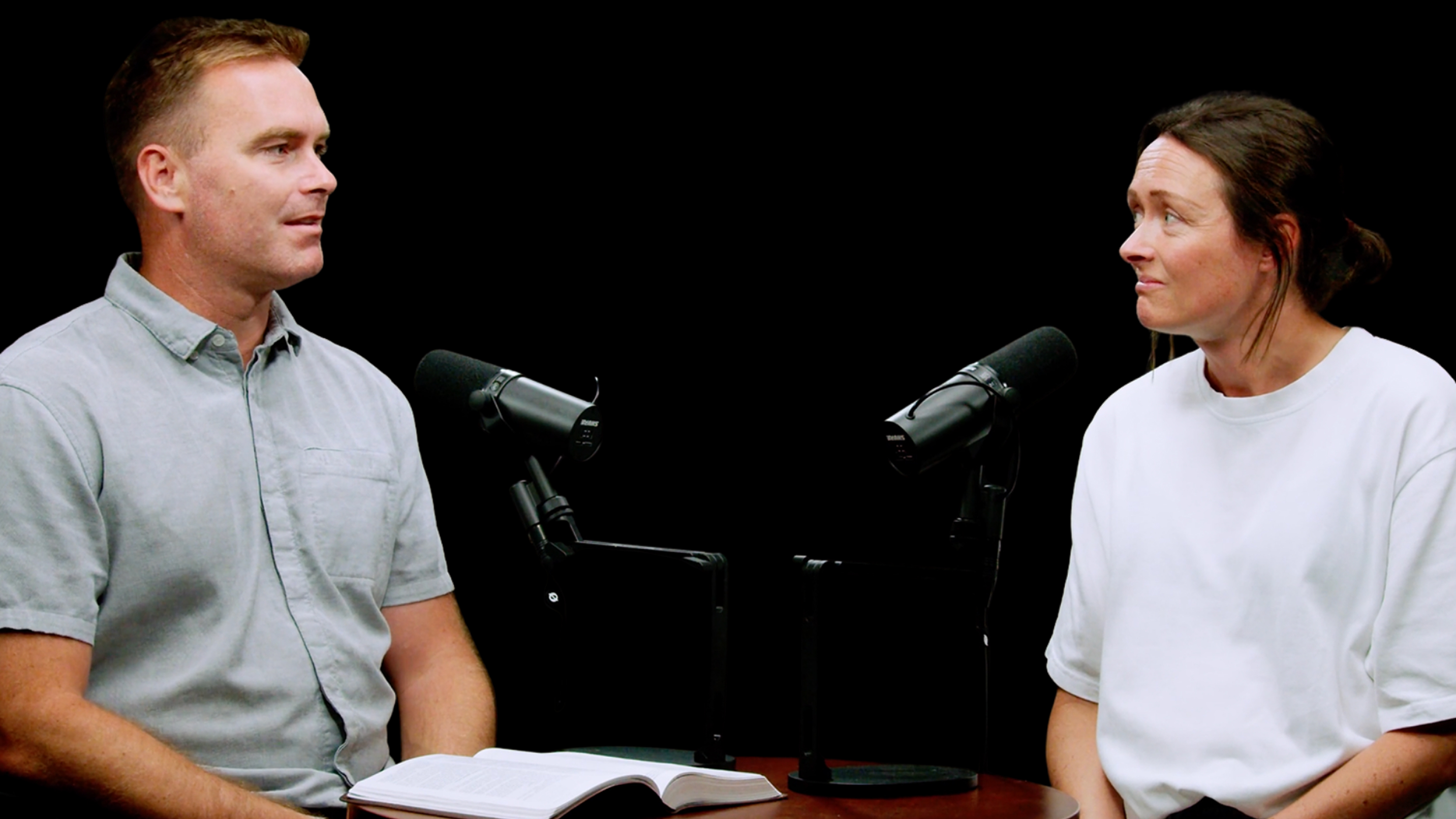
The Bible Explained in a Free 9-Episode Video Series.
Explore the story of the Bible from Genesis to Jesus through clear, engaging videos made for beginners, seekers, churches, and small groups.

We’re making sharing and learning about the Bible easier!
Discover the Bible's redemptive story and what it means for you.
And get answers to common questions along the way.

Using trusted sources and thoughtful answers.
Long Story Short has a great team of researchers, writers and presenters with extensive knowledge of the Bible. Having personally wrestled with many of the issues, they bring both head and heart to the questions people ask.
Where to start? The beginning seems like the right fit.
We’ve designed this series to be as simple and accessible as possible, it’s completely free to use and explore at anytime, at in any place. Start with episode one and explore as you please!
Common questions
Long Story Short is for anyone curious to learn more about the story of the Bible and why Jesus is at the very heart of the plot line.
You can watch the series on your own, with a friend, or in a group.
The “Explained Series” is a nine-episode video series introducing the viewer to the primary storyline of the Bible. As we travel all over the world, we discover how the Bible is both God’s story and ours, and why Jesus is at the story’s very centre. Alongside each episode in the series, short Q&A videos provide clear answers to many relevant questions.
Long Story Short is a relaxed journey through the biblical backstory that ends up leading to Jesus. So it's a great way for churches to introduce people to the Bible’s redemptive story and the good news of the Gospel. This can be done individually, one-on-one, or in a small group with a Leader’s Guide. See the Church Leaders section for more information.
The Explained series is a fresh update of Long Story Short’s original eleven-episode series which tells the story of the Bible even better than before. Now just nine episodes, the Explained series contains brand new footage, is faster-paced and even more clearly-focused on the key themes of the biblical story than before. We think you’re going to love it!
Long Story Short is absolutely free to anyone, any time, anywhere. Why? Because we believe everyone should have an opportunity to hear and understand the greatest story ever told.
Yes. The Bible can be trusted because it is historically rooted, textually well-attested, spiritually coherent, and centred on Jesus Christ.
The Bible has copying variations, as all ancient handwritten texts do. But the manuscript evidence allows scholars to compare copies and identify most variations. The core message of the Bible has not been lost.
The Bible contains historical claims that can be investigated. While not every event can be independently verified, many biblical people, places, customs, and events fit known historical contexts.
Different translations use different translation philosophies. Some aim for word-for-word accuracy, while others aim for thought-for-thought clarity. Most modern translations use Hebrew, Aramaic, and Greek manuscript evidence.
There are difficult passages and apparent tensions, but many alleged contradictions can be addressed by understanding context, genre, ancient writing conventions, and differing eyewitness perspectives.
The early church recognised the New Testament books based on apostolic connection, consistency with the Christian message, and widespread use among early Christian communities.
There are good historical reasons to take the Gospels seriously. They are early, rooted in eyewitness testimony, connected to real places and events, and centred on the public life, death, and resurrection of Jesus.
Yes. Jesus quoted the Hebrew Scriptures, treated them as authoritative, and understood His mission as fulfilling them.
No. Christian faith involves trust, but it is not blind. It is grounded in historical evidence, fulfilled biblical themes, the reliability of Jesus, and the transforming message of the gospel.
Bring your doubts into the open. Read the Bible carefully, ask honest questions, explore historical evidence, and consider starting with the life, death, and resurrection of Jesus.
The Bible was written by many human authors, including prophets, poets, kings, scribes, apostles, eyewitnesses, and companions of eyewitnesses. Christians believe God inspired these human authors so that Scripture is also God’s Word.
Christians believe God is the ultimate author of Scripture, but He wrote through human authors. Inspiration does not mean the human writers became robots. God used their personalities, language, culture, and historical settings.
A common estimate is around 40 human authors, though the exact number depends on how anonymous books, edited collections, and scribal involvement are counted.
The Old Testament was written and compiled by many authors, including Moses, prophets, poets, sages, scribes, and historians. Some books name their authors, while others are anonymous or traditionally attributed.
The first five books, called the Torah or Pentateuch, are traditionally associated with Moses. Many scholars also discuss later editing, compiling, and source material in the final form of the Torah.
The four Gospels are traditionally attributed to Matthew, Mark, Luke, and John. Matthew and John were apostles; Mark is traditionally linked to Peter; Luke was a companion of Paul and also wrote Acts.
Paul wrote many New Testament letters. Thirteen letters are traditionally associated with Paul, though some are debated in modern scholarship.
The author of Hebrews is unknown. It was traditionally associated with Paul in some early Christian circles, but many scholars believe it was written by another Jewish Christian author.
No. Church councils did not write the Bible. The biblical books were written earlier, copied, circulated, read, and recognized by God’s people. Councils and church leaders later clarified which books were received as canonical.
The Bible is about God, humanity, sin, rescue and renewal. It tells the story of God creating a good world, humanity turning away from him, and God working through history to bring salvation through Jesus.
The Bible is one unified story made up of many books. It includes history, poetry, law, prophecy, wisdom literature, biography and letters. Christians believe these diverse writings are held together by God’s purpose and fulfilled in Jesus.
You do not need to understand everything in the Old Testament before reading the New Testament. Many beginners start with a Gospel. However, the New Testament makes much more sense when you understand the Old Testament storyline of creation, covenant, Israel, promise and hope.
No. The Bible contains commands, but it is not mainly a rulebook. It is first the story of who God is, what he has made, what has gone wrong, and how he saves. Christian obedience is a response to God’s grace, not a way to earn God’s love.
Yes. Some parts are difficult, but the main message is clear enough for ordinary people to understand. Beginners should read with humility, patience, good guidance and a focus on the big story.
The most efficient way is to combine a beginner-friendly overview with actual Bible reading. Start with Long Story Short’s free Bible Explained series, then read a Gospel such as Mark or John.
.png)


.png)

.png)


.png)

.png)


.png)